
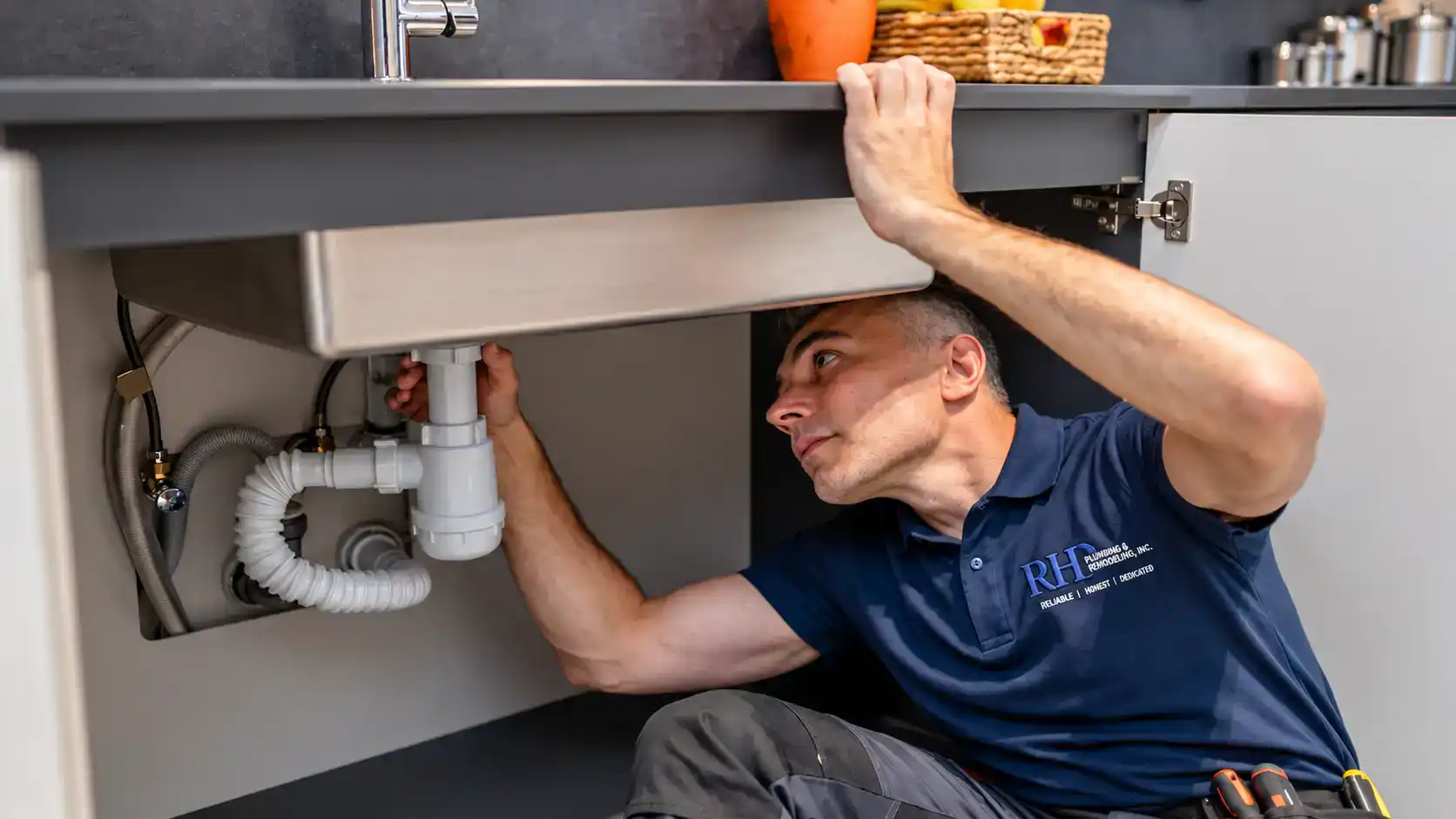
A finished kitchen or bathroom renovation feels like the hard part is over. Then, a few weeks or months later, you notice a slow drip under the sink, a toilet that runs longer than it used to, or a damp smell near the new tile. Plumbing problems after renovation are more common than most homeowners expect, and they rarely show up on the same day the work wraps up.
According to the U.S. EPA’s own guidance on mold and moisture control, buildings should be renovated with real consideration for how water moves through them, since undetected plumbing leaks are one of the clearest paths to hidden moisture damage. A remodel that changes pipe routing, fixture placement, or wall cavities does not automatically create a leak, but it does change the conditions around your existing plumbing.
Because our team handles both the plumbing and remodeling side of a project, we see this exact pattern from both directions, which is why it is worth understanding before your renovation starts.
What Actually Happens to Plumbing During a Renovation
Renovations move things. Cabinets get pulled out, walls open up, fixtures get relocated, and pipes that had not been touched in twenty years suddenly get cut, capped, rerouted, or reconnected. Each of those touchpoints is a place where a connection can be slightly imperfect, even when the work is done correctly, because adding any new joint to a residential plumbing system creates another spot that must hold pressure for years, not just pass a quick check on installation day.
Older galvanized or cast iron pipe sections are especially sensitive to this kind of disturbance. A pipe that has been quietly corroding from the inside for decades can look fine right up until a renovation puts new stress on it, whether from vibration, a shifted support, or simply being moved a few inches to make room for a new layout.
That kind of hidden weak point is one of the first things a plumber on our team checks for when brought onto a remodel from day one, rather than discovered later after something has already failed.
Why Small Plumbing Issues Often Turn Into Big Ones After Remodeling
Plumbing problems often seem to get worse after a renovation, rather than simply appear, because of timing. A slow leak behind a newly finished wall does not announce itself the way an exposed leak would. It has to soak through drywall, insulation, or subfloor before it becomes visible, and by then, the damage has already been accumulating for weeks.
Renovations also tend to seal problems in rather than expose them. A minor connection issue that would have been easy to spot and fix in an open wall becomes a hidden, ongoing leak once that wall is closed up with new drywall, tile, or cabinetry sitting on top of it.
This is simply how the physics of a closed wall cavity works, regardless of who performed the renovation, which is exactly why catching an issue before the wall closes matters so much.
Common Renovation Mistakes That Lead to Plumbing Problems
Several patterns keep showing up in renovation-related plumbing issues. Mixing incompatible pipe materials without the correct transition fittings is one of the most common, since different materials expand, contract, and corrode at different rates when joined incorrectly. Skipping a pressure test after new work is completed is another, since a connection can look secure and still fail once the system is fully pressurized and left running for weeks rather than minutes.
General contractors who are not plumbers themselves sometimes handle basic plumbing tasks during a remodel to save time or cost, without realizing that fixture height changes, drain slope requirements, and vent placement all affect long-term performance, not just whether water flows on the day of installation.
Because a licensed plumber is involved in every RHD remodel from the planning stage forward, these specific mistakes tend to get caught before cabinets and tile are already in place, not after.
Signs Your Renovation May Have Caused a Plumbing Issue
Watch for a few signs in the months after a remodel wraps up. These are the same signs our technicians are trained to trace back to a recent renovation, rather than dismissing them as unrelated wear and tear.
- Water pressure that changed noticeably: if pressure dropped or became inconsistent in one area of the home right around the time of the renovation, it often points to a partially restricted or misaligned connection introduced during the work, rather than a coincidence unrelated to the project.
- A musty smell with no visible source: this is often the first sign of a slow leak trapped behind new drywall or under new flooring, and it tends to show up well before any visible staining, which is exactly why it shouldn’t be ignored.
- Higher water bills without a change in usage: a small, hidden leak from a renovation-era connection can run for months without anyone noticing anything except a utility bill that keeps climbing for no obvious reason.
- Slow drains in fixtures near the renovated area: if a drain that worked fine before the remodel is suddenly sluggish, it can mean debris from the construction itself, like drywall dust or solder residue, made it into the line during the work.
How to Protect Your Plumbing During a Kitchen, Bathroom, or Basement Remodel
The most effective protection is coordination. When the plumbing work on a kitchen remodel, bathroom remodel, or basement finishing project is handled by the same team doing the rest of the renovation, there is no handoff between a general contractor guessing at plumbing work and a plumber who only sees the project after something has already gone wrong.
A pressure test before walls are closed up, and a final inspection once fixtures are installed and running, catch most renovation-related plumbing issues before they have a chance to hide behind new drywall.
Trusted Plumbing and Remodeling Support Across the Madison Area
If you are planning a renovation in Madison, Windsor, Stoughton, or anywhere across Dane County, having plumbing and remodeling handled under one roof matters more than it might seem. RHD Plumbing & Remodeling is Dane County’s only Certified Women-Owned plumbing contractor, and our team handles both plumbing and remodeling on a project, rather than splitting responsibility between two companies that never actually talk to each other.
That structure is backed by our 100 percent Customer Satisfaction Guarantee, which means the plumbing behind your new kitchen or bathroom is held to the same standard as the finishes in front of it.
Schedule a Plumbing Check Before or After Your Renovation
Whether you are planning a remodel or already noticing something off after one, catching a plumbing issue early is always less disruptive and less expensive than waiting for it to become visible on its own.
Contact our licensed plumbers today to schedule a plumbing inspection or repair for your Madison area home, backed by the same 100 percent Satisfaction Guarantee that covers every job we take on, from a quick repair to a full remodel.